Values Assessment — Peace & Abrahamic Values
In brief
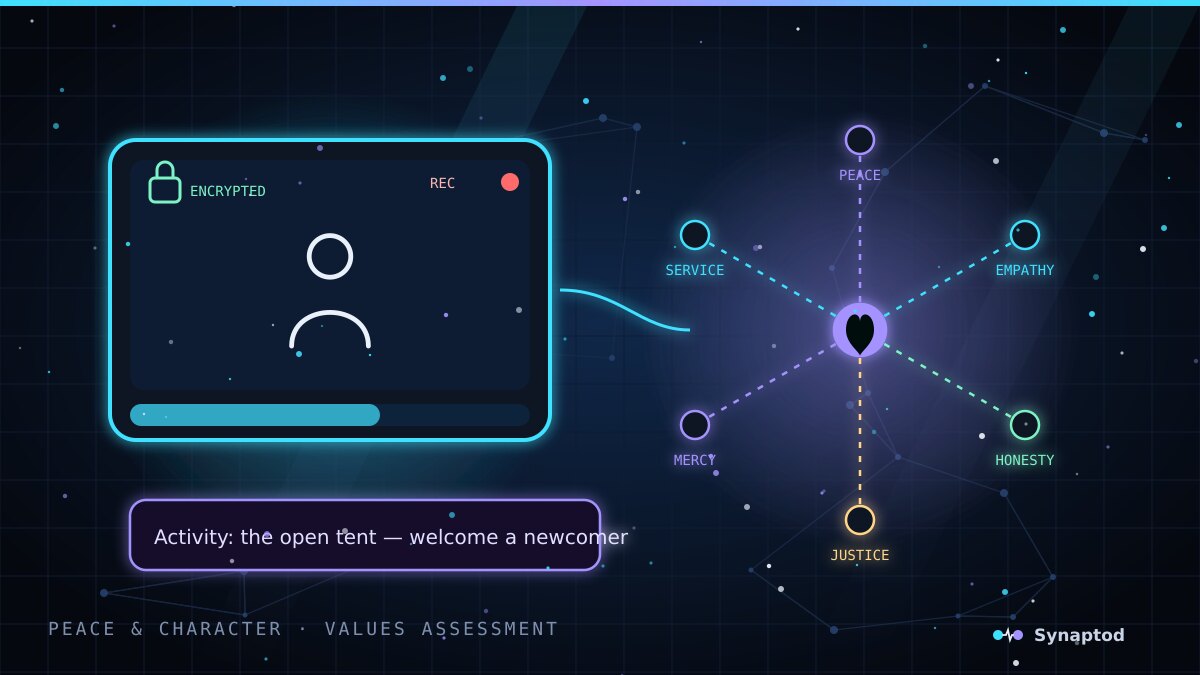
Values Assessment helps schools understand and grow the values young people live by. A student takes part in a short recorded video conversation on a secure, encrypted server; AI analyses the student’s answers and reflections for the values they express; and the teacher receives feedback plus a tailored character-building activity rooted in peace, empowerment and shared Abrahamic values.
01 · The challenge
Schools are asked to build character, tolerance and peaceful coexistence, but values are hard to see and even harder to measure. Written questionnaires invite the “right” answer instead of an honest one, teachers have no time to interview every student, and generic values lessons rarely meet each child where they are. Video is the most natural way for young people to express themselves — but it must be handled with the highest level of privacy.
02 · Who it’s for
Moral education and character-education teachers, school counsellors and wellbeing leads, school leaders reporting on values programmes, and the students and families they serve. It also supports ministries, school networks and community organisations that promote tolerance and coexistence.
03 · The experience
With parental consent in place, a student joins a short guided video conversation — real-life scenarios about fairness, honesty, forgiveness, helping a neighbour or resolving a disagreement. The recording is encrypted the moment it is captured and stored on a secure server that only authorised staff can reach. The AI then studies what the student says and how they reason, and produces a plain-language profile of the values that shine through and the ones still growing. The teacher reviews it, adds their own judgement, and receives a ready-to-use activity — a role-play, a service project, a family conversation or a story — designed to strengthen exactly those values. The student’s next session shows how they have grown.
04 · How it works
Under the hood
- Consent first: parents and the school approve participation before any recording.
- Secure capture: the video session runs on a protected server, and recordings are encrypted in transit and at rest with role-based access.
- Values analysis: AI analyses the student’s spoken answers, reasoning and reflections against a values framework — peace, empathy, honesty, justice, mercy, respect, responsibility and service.
- Teacher in the loop: an educator reviews every analysis and adds context before anything is shared.
- Feedback: students receive encouraging, strengths-based feedback; teachers receive class-level insight.
- Activity generator: each result produces a character-building activity grounded in peace, empowerment and shared Abrahamic values, adapted to the student’s age and setting.
- Growth over time: repeat sessions show progress, informing school values programmes and reports.
05 · Built to grow
Begins in one classroom and grows to whole schools, school networks and national values programmes. The same engine works in Arabic and English, can be aligned with moral-education curricula, and powers an open library of activities that families, youth centres and community organisations can use too.
06 · Added advantages
- Hears students in their own words, which is more honest than a tick-box survey.
- Turns assessment straight into action — every result comes with an activity.
- Gives teachers individual insight without hours of interviews.
- Builds a shared language of peace and coexistence across schools, homes and communities.
- Evidence for leaders on how values programmes are working.
07 · The human side
Children’s privacy comes first: participation needs parental consent, videos are encrypted and access-controlled, nothing is used for advertising, and recordings are deleted according to the school’s retention policy. The system does not identify faces or rank children. Results are never used to label or punish a student — they guide supportive activities. Teachers review every analysis and remain responsible for what is shared.
Questions people ask
How does the Values Assessment work?
A student takes part in a short guided video conversation on a secure server. AI analyses the values expressed in their answers, a teacher reviews the result, and the system creates a character-building activity tailored to the student.
Is the student’s video safe?
Yes. Participation requires parental consent, recordings are encrypted in transit and at rest on a secure server, and only authorised staff can access them.
Which values does it focus on?
Peace, empathy, honesty, justice, mercy, respect, responsibility and service — values shared across the Abrahamic traditions and common to humanity.
Does it give children a score or label?
No. It describes strengths and growing areas in encouraging language and turns them into activities. It is never used to rank or punish students.
Can families and communities use the activities?
Yes. The activities are designed to be shared with families, youth centres and community programmes so values are practised beyond school.
Related cases
Character Development Lab
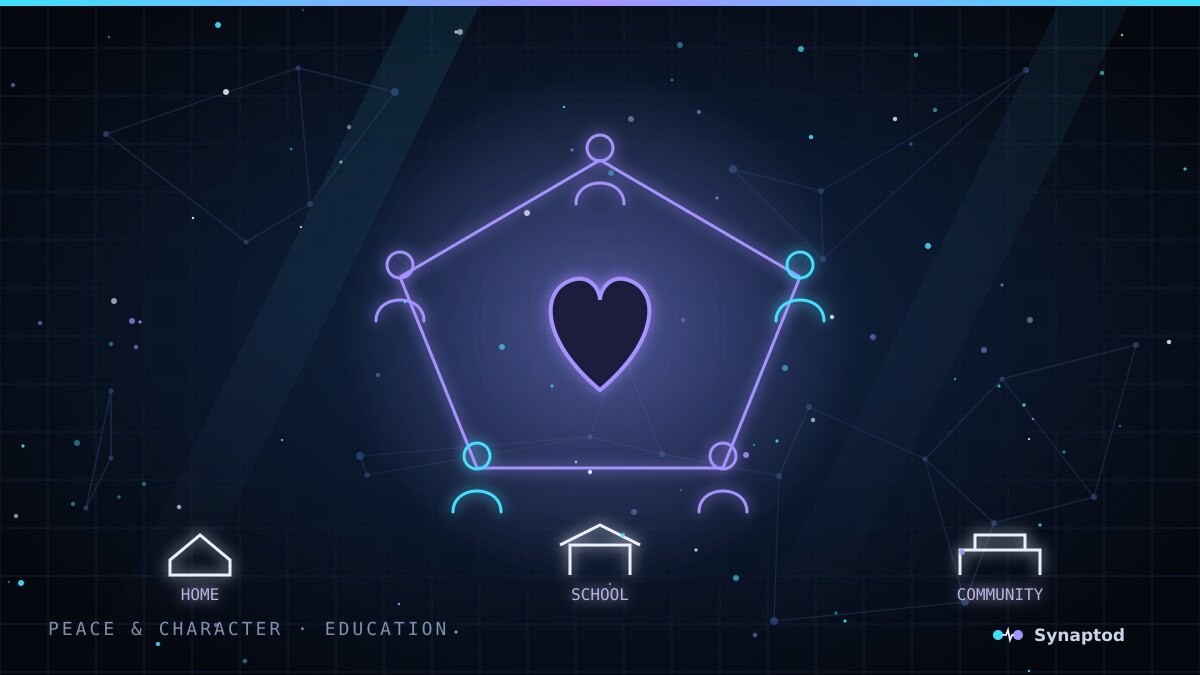
Character Development Lab plans character-building activities that fit each learner’s real environment — home, school and community — so values such as responsibility, honesty, empathy and respect are
More in You
More in You offers character, values and personal-development activities that help young people discover their strengths, reflect on who they want to become, and practise the small daily habits that g
Special AI Tutor
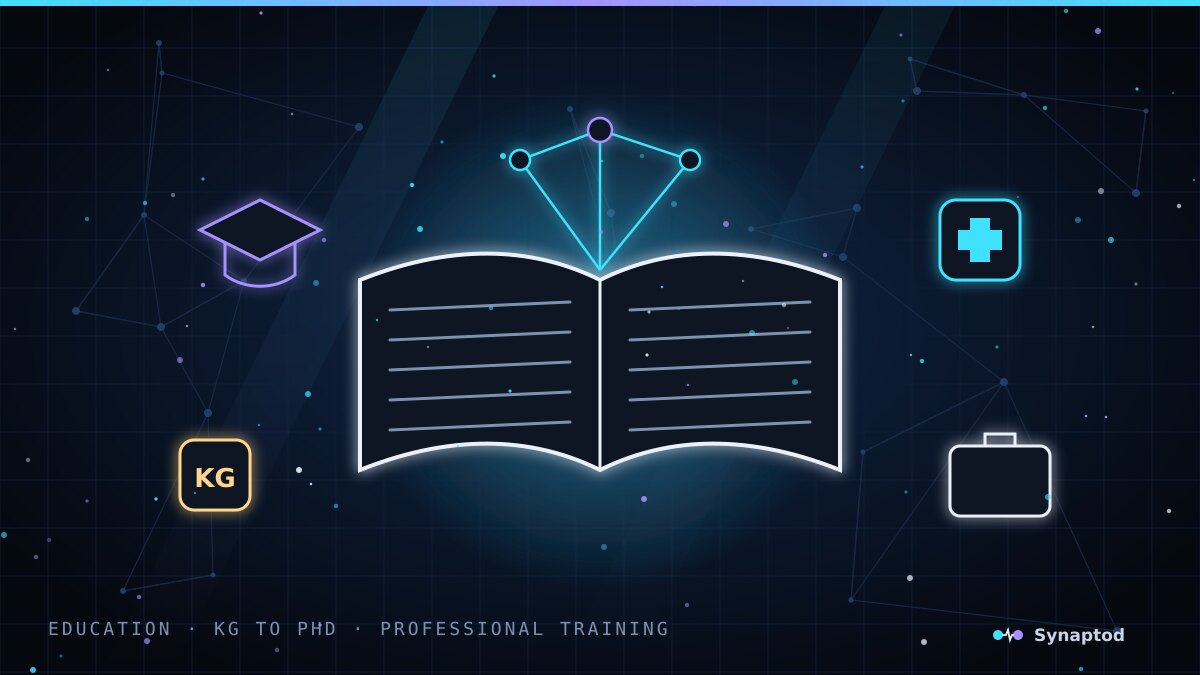
Special AI Tutor is a personalised learning and personal-development tutor suitable for every level from kindergarten to PhD, including medical and job training.
Want something like Values Assessment — Peace & Abrahamic Values?
Tell us about your setting and we’ll explore it with you.
Last reviewed 2026-11-24