Values Assessment
Every child has something to say. We listen — safely.
A short video conversation on a secure, encrypted server. AI hears the values in a student’s own words. A teacher turns them into growth.
Flagship theme
Technology that builds character. AI that serves peace.
Why a technology lab cares about character
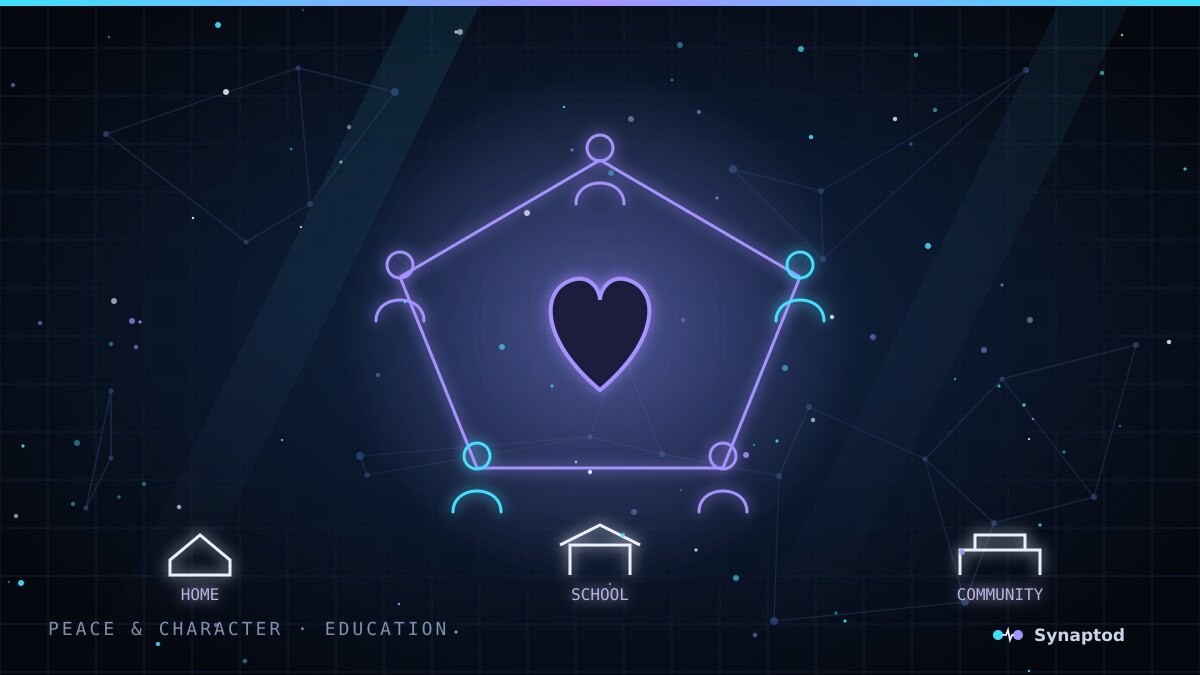
The most important outcome of education is not a score but a person: one who is honest, kind, responsible and able to live well with others. We build tools that help schools, families and communities practise those values every day — with the teacher, parent and counsellor always leading.
Character is built through practice: small, repeated choices in real situations — at home, at school and in the community. Our tools help adults see where each young person is, plan the right next experience, and celebrate growth, while children stay free to grow at their own pace.
Our promises
Hear each student in their own words through a secure video conversation, see the values that shine through, and get an activity to grow the rest.
Strengths-based feedback that helps young people believe in themselves, find their voice and take positive action.
Mercy, justice, honesty, hospitality and care for the neighbour — the upright, shared values of the family of Abraham.
Values, empathy and responsibility practised through real-life activities that fit each learner’s environment.
Dialogue practice and conflict-resolution coaching for students and staff.
Cultural and interfaith understanding in the spirit of the UAE’s commitment to tolerance and human fraternity.
Values Assessment
A short video conversation on a secure, encrypted server. AI hears the values in a student’s own words. A teacher turns them into growth.
How the Values Assessment works
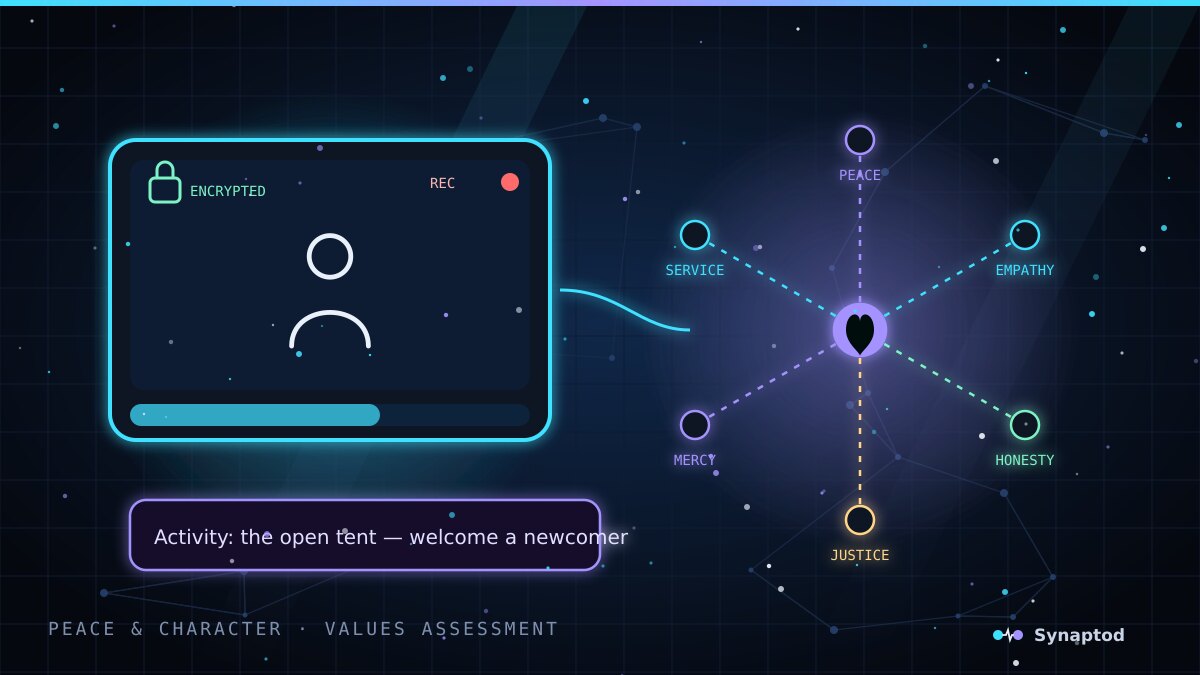
With parents’ consent, the student joins a short guided video conversation on a secure server. The recording is encrypted from the first second.
Gentle questions about fairness, forgiveness, honesty, helping a neighbour and settling a disagreement — no right-answer quizzes.
AI reads the student’s answers and reasoning and maps the values they express: peace, empathy, justice, mercy, respect, responsibility and service.
An educator checks every analysis. The student receives encouraging, strengths-based feedback; the teacher sees class-level insight.
Each result creates an activity — role-play, service project, family conversation or story — rooted in peace and shared Abrahamic values.
The next session shows how values have grown, guiding the school’s whole values programme.
Children’s privacy comes first: parental consent, encryption in transit and at rest, strict role-based access, deletion on schedule, no face recognition and no ranking of children.
Abrahamic values & Hanif principles
Like Abraham’s tent, open on every side, our activities welcome everyone. They draw on values shared across the Abrahamic traditions and common to all humanity, practised with the sincerity of the upright Hanif path.
Caring for others as we would want to be cared for.
Standing up for what is right, even when it is hard.
Telling the truth and keeping promises.
Welcoming the guest and sharing what we have, like Abraham’s open tent.
Serving family, community and those in need.
Looking after the earth and everything entrusted to us.
Repairing relationships and choosing peace.
The upright Hanif path: living by our values with sincerity.
Empowerment
Feedback starts with what a young person already does well — their courage, kindness or honesty — and then invites one next step. Students set their own small goals, take on service projects, and become peace ambassadors who mentor younger peers.
Empowered young people do not just learn about peace. They lead it.
How we spread it
Peace grows like a nerve network: every connection makes the next one stronger. Here is how a single pilot becomes a national culture of coexistence.
Pilot in one class, expand across a school, then whole school networks and national moral-education programmes.
Certify “Values Champions” — teachers who coach colleagues and lead the programme in their school.
Weekly activities parents and children do together, so values travel from school to home.
A growing, free library of peace and character activities in Arabic and English for any school or youth group.
Work with community centres, youth clubs and cultural institutions to bring the activities to every neighbourhood.
Students who complete the journey become ambassadors, leading service projects and mentoring younger peers.
With consent, share anonymised stories, short films and challenges on social media — powered by HypeCrew — to spark a movement.
Publish what works with university partners, so ministries and schools adopt it with confidence.
Annual peace festivals, values challenges and school awards that celebrate progress.
Questions people ask
A secure, consent-based video conversation in which a student responds to real-life scenarios. AI analyses the values expressed, a teacher reviews it, and the system creates a tailored character-building activity.
Values shared across the traditions of the family of Abraham — such as mercy, justice, honesty, hospitality, care for the neighbour, stewardship and forgiveness — which are also common to people of every background.
Hanif describes the upright, sincere path associated with Abraham: living by one’s values with integrity and devotion to what is good.
Participation needs parental consent, videos are encrypted on a secure server with strict access, results are never used to label or rank a child, and teachers review everything.
Schools, families, youth programmes and community centres are welcome to pilot with us.